 Yard
YardCalculate asphalt
How these numbers are worked out: methodology & data sources
How to use the asphalt calculator
- Enter the length and width of the area in feet.
- Enter the compacted thickness of the asphalt layer in inches.
- Keep the density at 145 lb per cubic foot unless your plant or contractor gives you another number.
- Add a local price per ton to estimate material cost.
Asphalt tonnage formula
Tons = Cubic feet × density (lb/ft³) ÷ 2,000
Worked example
A 50 ft × 12 ft driveway at 3 inches: 600 sq ft × 0.25 = 150 cubic feet. 150 × 145 = 21,750 lb, or about 10.9 tons of asphalt.
Asphalt mix types & densities
Asphalt is sold by weight, so the mix you pick changes the tonnage. These are typical compacted densities:
| Mix | Typical density | Where it is used |
|---|---|---|
| Hot mix asphalt (HMA, dense-graded) | ~145 lb/ft³ (≈ 2,320 kg/m³) | Driveways, parking lots, most roads |
| Stone matrix asphalt (SMA) | 148–152 lb/ft³ (≈ 2,370–2,435 kg/m³) | Heavy-traffic highways; rare for homes |
| Open-graded (porous / friction course) | ~130 lb/ft³ (≈ 2,080 kg/m³) | Porous pavements and highway surfaces that drain water |
| Cold mix / cold patch | ~140 lb/ft³ (varies by brand) | Temporary pothole and patch repairs |
Choose the mix in the calculator to load its density. Hot mix arrives loose and is spread about 25% thicker than the finished depth, then rolled down – the calculator shows that spread thickness too. See cold patch vs hot mix asphalt for repairs.
Thickness by application
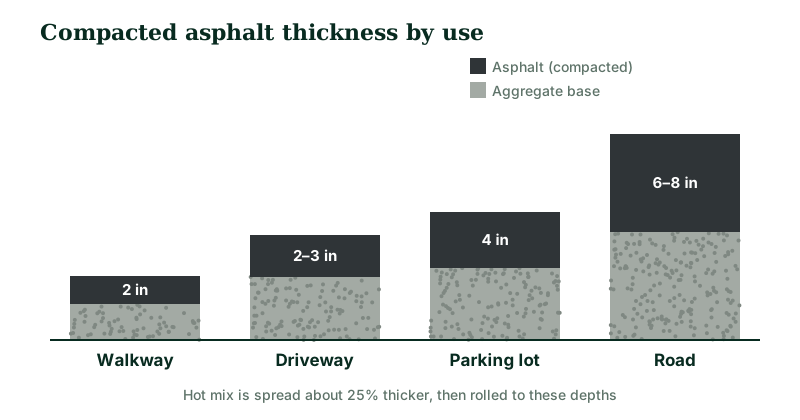
| Application | Compacted asphalt | Aggregate base |
|---|---|---|
| Walkway / path | About 2 in | About 4 in |
| Residential driveway | 2–3 in | 6–8 in |
| Parking lot | About 4 in | 8 in or more |
| Road | 6–8 in, in lifts | Engineered |
These are general figures. The right design depends on soil, climate and traffic, and paving is normally done by a contractor with proper compaction equipment. Our methodology page lists the sources behind them.
Asphalt vs other driveway surfaces
Asphalt is flexible, quick to install and easy to patch, but it needs sealing and eventually resurfacing. Gravel is cheaper up front but needs regular top-ups – use the gravel calculator to compare. Pavers cost more but are easy to repair one piece at a time – see the paver calculator.
Getting a quote
Contractors price asphalt jobs by the square foot or by the ton plus labor, base preparation and equipment. Use this calculator to understand the material quantity, then compare at least two written quotes.
Keep going
Related calculators
Frequently Asked Questions
How many tons of asphalt for a 20x20 driveway?
400 sq ft at 3 inches is 100 cubic feet; at 145 lb/ft³ that is 14,500 lb, about 7.25 tons.
How many tons are in a cubic yard of asphalt?
At 145 lb per cubic foot, a compacted cubic yard (27 cu ft) weighs about 3,915 lb, or 1.96 tons – call it 2 tons. Loose asphalt in the truck weighs less per yard because it has not been compacted yet. Order hot mix in tons, not yards; plants sell it by weight. More materials are in the weight chart.
How thick should asphalt be for a driveway vs a parking lot?
Typical compacted thicknesses are 2–3 inches for a residential driveway, about 4 inches for a parking lot and 6–8 inches for roads, placed in more than one lift when thick. All sit on a compacted aggregate base. Hot mix is spread about 25% thicker – a 2 inch driveway goes down at about 2.5 inches – and then rolled. See the thickness table above and the driveway base guide.
How much area does one ton of asphalt cover?
At 145 lb per cubic foot, one ton is about 13.8 cubic feet. Coverage by thickness:
| Compacted thickness | Area per ton (at 145 lb/ft³) |
|---|---|
| 1 in | about 166 sq ft |
| 2 in | about 83 sq ft |
| 3 in | about 55 sq ft |
| 4 in | about 41 sq ft |
| 6 in | about 28 sq ft |
Heavier mixes cover a little less. For exact tons use the calculator above, or the cubic yard calculator for volume.
Why add extra asphalt?
A small allowance (about 5%) covers uneven base and edges.
Hot mix vs cold patch – when do I use each?
Use hot mix for new driveways, overlays and permanent repairs: it is placed hot (roughly 275–300°F) and rolled, and bonds into a long-lasting surface. Use cold patch for small potholes and emergency fixes, especially in winter when asphalt plants are closed – it comes in bags and can be tamped in by hand, but it is a temporary repair. Read cold patch vs hot mix for the full comparison.
What is the difference between blacktop and tarmac?
In everyday speech they mean the same thing: a paved asphalt surface. Technically, "blacktop" is a US term for asphalt concrete – stone bound with bitumen – while "tarmac" comes from tarmacadam, crushed stone bound with coal tar, patented in 1902 and rarely used today. In the UK, "tarmac" is still the everyday word for asphalt. Either way, size it with the calculator above or read our asphalt repair guide.
How many truckloads will my driveway need?
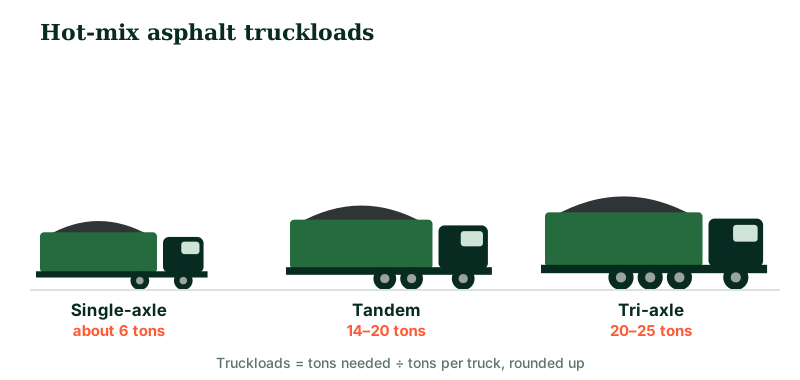
Divide the tons by what each truck carries: a tandem dump truck typically hauls 14–20 tons of asphalt and a tri-axle 20–25 tons. A 12 × 60 ft driveway at 3 inches needs about 13.7 tons with 5% extra – one tandem load. Pick a truck size in the calculator for the count, and see the bag vs bulk guide for small jobs.
How long before I can drive on new asphalt?
Wait at least 2–3 days before driving on a new driveway – longer in hot weather – and avoid sharp turns, parked trailers, kickstands and heavy trucks for the first few weeks while it hardens. Asphalt keeps curing for months, so most contractors suggest waiting 6–12 months before the first sealcoat. Ask your paver for their own timing; our asphalt guide covers patch curing.
Can I put new asphalt over an old driveway?
Often, if the old surface is structurally sound – cracks repaired, low spots leveled and no base failure. An overlay is usually 1.5–2 inches of hot mix over a tack coat that bonds the layers. If the old driveway is crumbling, sinking or covered in alligator cracking, the base has failed and an overlay will crack again; it needs removal and a new base. Enter 1.5–2 inches above to price an overlay, and size a new base with the gravel calculator.