 Yard
YardCalculate gravel
How these numbers are worked out: methodology & data sources
How to use the gravel calculator
- Pick the shape of the area (rectangle, circle or triangle) and enter its size in feet.
- Enter the depth in inches. Most gravel projects use 2–4 inches; driveways need more (see the table below).
- Keep the default weight of 1.4 tons per cubic yard unless your supplier gives you a different number.
- Add 5–10% extra so you do not run short after the gravel settles.
- Optional: add a price per ton or per yard to estimate the cost.
Gravel formula
Gravel is sold by volume (cubic yards) or by weight (tons). The calculator does three simple steps:
Cubic yards = Cubic feet ÷ 27
Tons = Cubic yards × weight per cubic yard
Worked example
A 10 ft × 12 ft patio with 3 inches of gravel: 10 × 12 × 3 ÷ 12 = 30 cubic feet. 30 ÷ 27 = 1.11 cubic yards. At 1.4 tons per yard that is about 1.56 tons. With 10% extra you would order about 1.22 cubic yards or 1.71 tons.
How deep should gravel be?
| Project | Typical depth | Notes |
|---|---|---|
| Walkway or garden path | 2–3 in | Over landscape fabric and a firm, level base. |
| Patio | 3–4 in top layer | Often on top of 4 in of compacted base gravel. |
| Decorative bed / mulch replacement | 2–3 in | Larger stone needs a little more depth to cover the soil. |
| Driveway (new) | 8–12 in total | Built in layers; see our driveway layers guide. |
| Driveway top-up | 2–3 in | Fill ruts and potholes first. |
These are common rules of thumb, not engineering specs. Soil type, drainage and traffic change what you need, so check with a local supplier or contractor for load-bearing work.
How much does a cubic yard of gravel weigh?
Most gravel weighs roughly 1.2 to 1.5 tons per cubic yard (about 2,400–3,000 lb). Wet gravel weighs more, and different stones have different densities. That is why the calculator lets you change the weight. See the full landscape material weight chart.
Common types of gravel
- Pea gravel – small, rounded stones; comfortable underfoot for patios, play areas and paths.
- Crushed stone – angular pieces that lock together; good for bases and driveways.
- River rock – larger, smooth stones used for drainage and decoration.
- Crusher run / road base – a mix of crushed stone and fines that compacts hard; used as a base layer.
Bulk or bagged gravel?
Bags are handy for small jobs. A typical 0.5 cubic foot bag means you need 54 bags for one cubic yard, so for anything bigger than a small path, bulk delivery is usually cheaper and easier. Compare both prices before you order.
Tips before you order
- Measure twice and split odd shapes into rectangles, circles and triangles, then add the results.
- Ask whether the supplier sells by the ton or by the yard, and use the matching result.
- Lay landscape fabric under decorative gravel to slow weeds.
- Add edging so the gravel stays in place.
Keep going
Related calculators
Frequently Asked Questions
How many tons of gravel do I need for a 10x10 area?
At 3 inches deep, a 10 × 10 ft area needs 25 cubic feet, or about 0.93 cubic yards. At 1.4 tons per cubic yard that is about 1.3 tons before adding any extra.
How much area does one ton of gravel cover at 2, 3 and 4 inches deep?
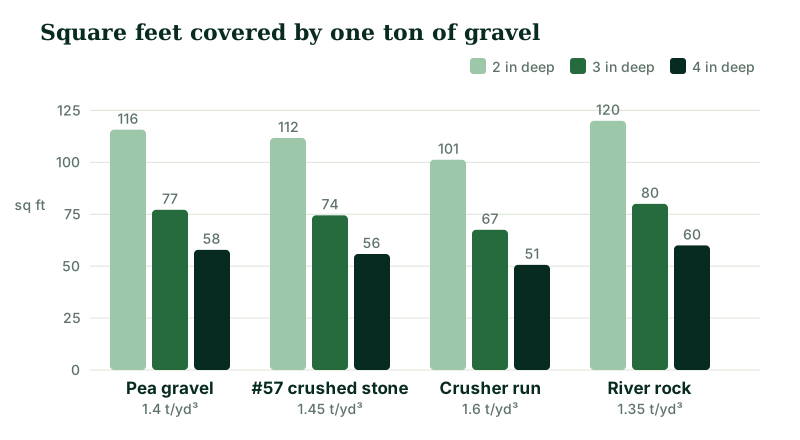
At 1.4 tons per cubic yard, one ton is about 0.71 cubic yards (19.3 cubic feet). That covers roughly 116 sq ft at 2 inches, 77 sq ft at 3 inches and 58 sq ft at 4 inches. Heavier stone covers a little less – see the material weight chart.
How many cubic feet are in a cubic yard?
There are 27 cubic feet in one cubic yard (3 ft × 3 ft × 3 ft).
Should I order extra gravel?
Yes. Adding 5–10% helps cover settling, uneven ground and spillage.
Is gravel sold by the ton or the yard?
Both are common. Use the tons result if your supplier sells by weight and the cubic yards result if they sell by volume.
How many tons of gravel do I need for my driveway?
Multiply length × width × depth (in feet) for cubic feet, divide by 27 for cubic yards, then multiply by about 1.4 for tons. Topping up a 10 × 50 ft driveway with 3 inches takes about 4.6 cubic yards, or 6.5 tons. Building a new 10 × 50 ft driveway 10 inches deep takes about 15.4 cubic yards, or roughly 21.6 tons. The gravel driveway layers guide splits that into base, middle and top layers.
How thick should a gravel driveway be?
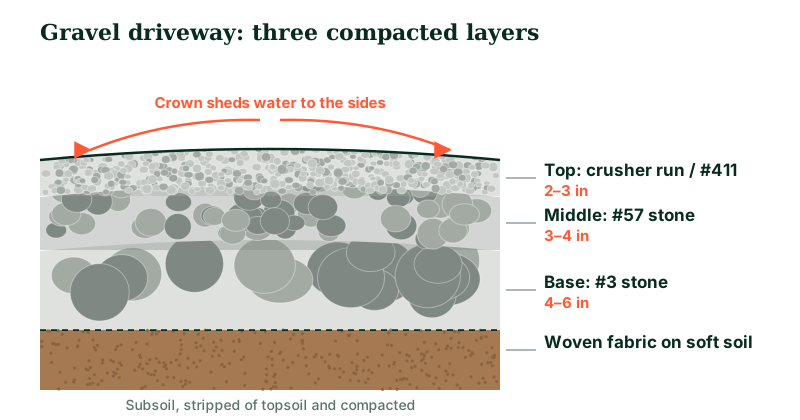
Build it in layers rather than one thick pile: 4–6 inches of large base rock (such as #3 stone), 3–4 inches of a middle layer (such as #57 stone) and 2–3 inches of crusher run on top. Compact each layer in lifts and crown the surface so water runs off to the sides. The driveway layers guide covers each layer in detail.
What is the cheapest gravel for a driveway?
Crusher run (also sold as road base or dense-grade aggregate) and recycled concrete are usually the lowest-cost choices. They are produced locally in large volumes and compact into a hard, stable surface. Decorative stone such as river rock and pea gravel costs more and rolls under tires. Prices vary a lot by region, so get per-ton quotes and compare them with the cost fields in the calculator. The bag vs bulk guide shows when delivery fees change the math.
Do gravel suppliers have minimum loads or small-load surcharges?
Many do. Quarries and landscape yards often set a minimum delivery – commonly a few tons or one truckload – and add a flat delivery or "short load" fee to small orders. If you only need a yard or two, compare the delivered price with picking it up yourself or buying bags. Check the truckload result above before you call so you can order full loads. See our bag vs bulk buying guide.
How do I keep gravel from spreading?
Install edging (steel, aluminum, plastic, brick or stone) set slightly above the finished gravel, lay landscape fabric under decorative gravel, and use angular crushed stone rather than round pea gravel where people walk or drive a lot. Plastic gravel stabilizer grids also help on paths and driveways. How to build a gravel patio walks through edging step by step.