 Yard
YardCalculate fill dirt
How these numbers are worked out: methodology & data sources
How to use the dirt calculator
- Enter the size of the area to fill and the finished (compacted) depth.
- Set a compaction allowance. Fill dirt is delivered loose and gets denser when you compact it, so you need to order more than the finished volume.
- Enter the truck size your hauler uses to see the number of loads.
Fill dirt formula
Order volume = Compacted volume × (1 + compaction %)
Tons = Order volume × tons per yard
Truckloads = Order volume ÷ truck capacity (round up)
Worked example
Raising a 15 ft × 20 ft area by 6 inches: 300 sq ft × 0.5 ft = 150 cubic feet = 5.56 cubic yards compacted. With 15% compaction you order about 6.39 cubic yards, or about 7.7 tons at 1.2 t/yd³ – one 10-yard truckload.
Loose, delivered and compacted volume (shrink and swell)
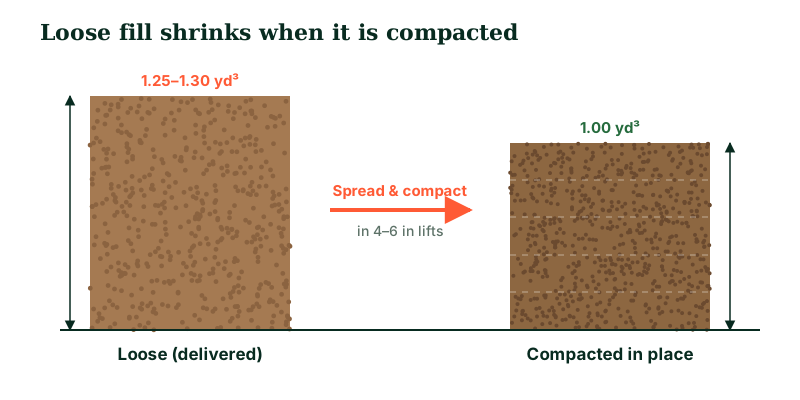
Dirt changes volume every time it is dug, moved and compacted. That is why ordering exactly the volume of your hole leaves you short.
- Bank volume – soil as it sits undisturbed in the ground.
- Loose (delivered) volume – the same soil after digging and loading. It swells with air and takes up more space in the truck.
- Compacted volume – what is left after you spread and compact it in place. It is noticeably smaller than the loose volume you paid for.
The rule of thumb for ordering: loose cubic yards to order = compacted cubic yards needed × 1.25 to 1.30. The calculator's default 25% allowance applies a 1.25 factor. Use 30% for clay or when you compact hard with a plate compactor or roller.
| Compacted volume needed | Order at ×1.25 | Order at ×1.30 |
|---|---|---|
| 5 yd³ | 6.25 yd³ | 6.5 yd³ |
| 10 yd³ | 12.5 yd³ | 13 yd³ |
| 20 yd³ | 25 yd³ | 26 yd³ |
| 50 yd³ | 62.5 yd³ | 65 yd³ |
Exact shrink depends on soil type and moisture: sandy soil changes less, clay changes more. For structural fill, follow the compaction spec from your engineer or builder. Our methodology page explains the default.
What is fill dirt used for?
- Raising low areas and changing the grade so water drains away from a house
- Filling holes left by removed trees, pools or old foundations
- Building up a base for a shed pad or patio (topped with gravel)
- Backfilling around retaining walls (check wall maker's drainage guidance)
Large grade changes near buildings, retaining walls and septic systems can affect drainage and structures. For those jobs, talk to a local contractor or engineer and check local permit rules.
Fill dirt vs topsoil
Fill dirt is mostly subsoil – clay, sand and rock with little organic matter – so it compacts well and stays put. Topsoil is richer and better for growing, but it settles more. A common approach is fill dirt for bulk height and 4–6 inches of topsoil on top where you want grass or plants. Use the topsoil calculator for the top layer.
Typical weight of dirt
Dry fill dirt is often around 1.1–1.4 tons per cubic yard, and wet clay can be heavier. Weight matters if you are hauling it in a pickup or trailer – check your vehicle's payload rating before loading.
Keep going
Related calculators
Frequently Asked Questions
How many truckloads of fill dirt do I need?
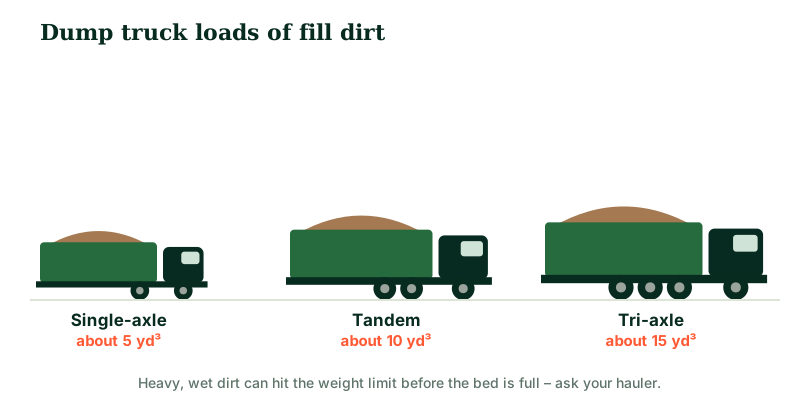
Divide the loose cubic yards by the truck's capacity and round up. Typical capacities: single-axle dump trucks carry about 3–5 cubic yards, tandem-axle trucks about 10–14 and tri-axle trucks about 14–18. Weight limits often cap a load before the bed is full – dirt weighs 1.1–1.4 tons per yard – so ask your hauler what they actually carry. The truckload result above does the math; the pool fill guide has a worked example.
How much does a yard of fill dirt weigh?
Usually about 1.1–1.4 tons, depending on soil type and moisture.
What is the difference between loose, delivered and compacted volume?
Bank volume is soil in the ground, loose (delivered) volume is the fluffed-up soil in the truck, and compacted volume is what remains after you spread and compact it. Loose fill shrinks when compacted, so order about 1.25–1.30 times the compacted volume you need. The shrink-and-swell section above explains the factor, and the methodology page lists our defaults.
How do I calculate fill dirt for a hole?
Measure length, width and average depth of the hole, enter them in the calculator and add a compaction allowance.
Can I plant grass directly on fill dirt?
Grass grows poorly in plain fill. Add 4–6 inches of topsoil on top.
How much fill dirt do I need to fill a pool?
Multiply the pool's length × width × average depth for cubic feet, divide by 27, then add 25–30% for compaction. A 16 × 32 ft in-ground pool averaging 5 ft deep holds about 95 cubic yards. Capping it with 6 inches of topsoil (about 9.5 yards) leaves about 85 compacted yards of fill – roughly 107–111 loose yards, or 11–12 tandem truckloads. Read the full pool fill-in guide before you start.
Where can I get free fill dirt?
Excavation and construction contractors often need to get rid of clean fill from basements and grading jobs, and some will deliver it free or for a small fee. Check local classified and marketplace listings, ask landscapers and road crews, and post a "clean fill wanted" listing. Always ask where it came from: free fill can contain rocks, roots, concrete, trash or contaminated soil. Never use it where you want plants to grow – cap it with topsoil.
How do I calculate fill for a sloped or uneven area?
For a steady slope, measure the fill depth at the shallow and deep ends and average them: volume = length × width × (shallow + deep) ÷ 2. For a wedge that runs from zero to full depth, that is half the deepest depth. For lumpy ground, set stakes on a grid every few feet, measure the depth at each, average the readings and enter that depth above. Split odd shapes into rectangles and triangles with the cubic yard calculator.
What is the best type of fill dirt?
Ask for clean fill: soil with no trash, roots, stumps, large rocks or concrete. Sandy or loamy fill compacts well and drains; heavy clay compacts but holds water and swells and shrinks with the seasons. Under slabs, driveways and footings, use the "select" or "structural" fill your builder specifies. Fill grows almost nothing, so finish planted areas with topsoil; the pool fill guide shows the layers.
Should I compact fill dirt in layers?
Yes. Spread fill in lifts of about 4–6 inches (8–12 inches with heavy equipment), water lightly if it is very dry, and compact each lift before adding the next. Dumping it all at once and compacting the top leaves soft pockets that settle later. Anything that will carry a slab, driveway or building needs an engineer's compaction spec. The pool fill guide shows the lift-by-lift process.